Welcome To Ahmednagar

Ahmednagar District is one of the most historically rich and culturally diverse regions in the state of Maharashtra. Known for its glorious past, strong agrarian base, and growing urban centers, the district occupies an important place in Maharashtra’s historical, cultural, and economic landscape.

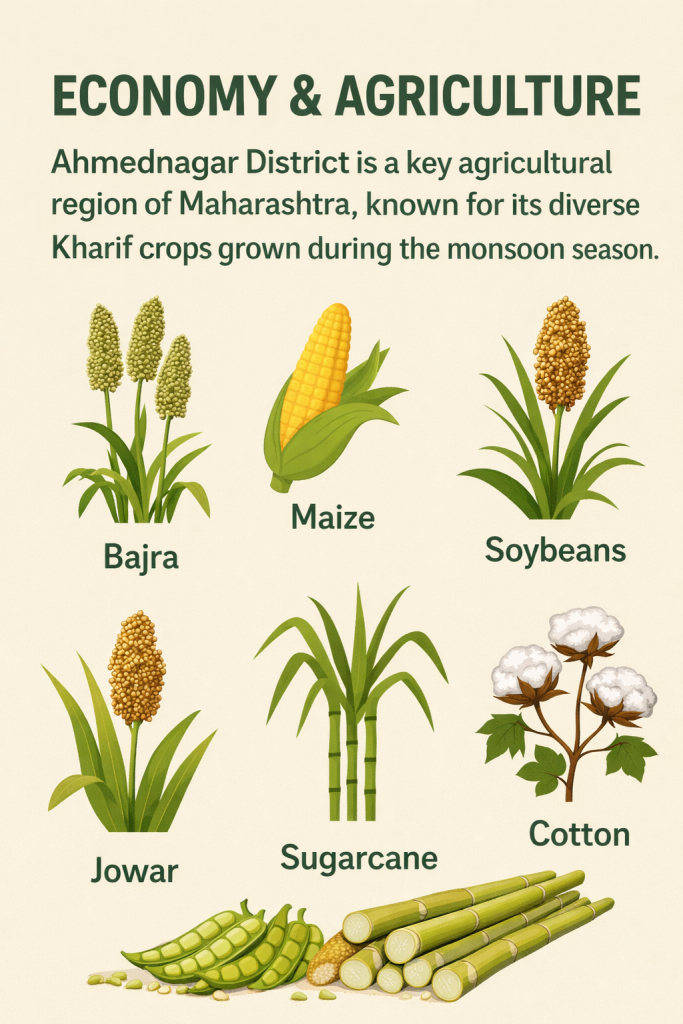
Named after Ahmad Nizam Shah, the founder of the city, Ahmednagar is renowned for its iconic forts, ancient monuments, and legacy of the Nizam Shahi and Maratha eras. The district is blessed with varied geography, ranging from fertile river basins of the Godavari and Pravara to semi-arid regions that support resilient farming communities. Agriculture forms the backbone of the district, with sugarcane, jowar, bajra, and dairy farming playing a major role.

Ahmednagar city, the district headquarters, serves as a key administrative and military center and is home to important Army establishments, educational institutions, and healthcare facilities. The district has also emerged as a center for cooperative movements, especially in the sugar and dairy sectors, contributing significantly to rural development.

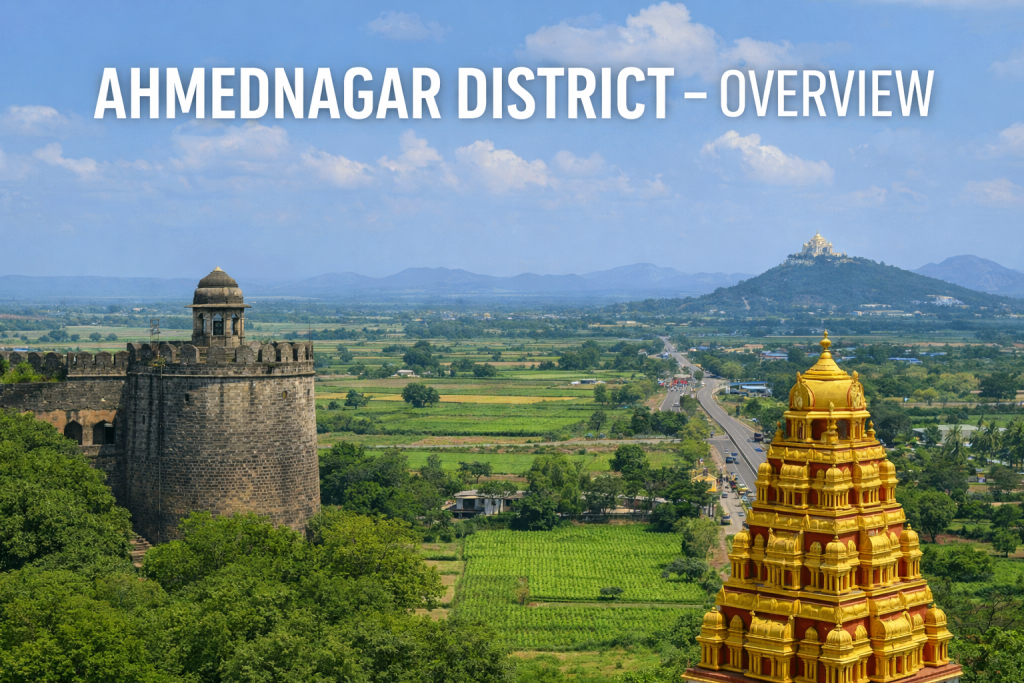
ahmednagar district aerial view

Ahmednagar District – Overview

Ahmednagar District is one of the most historically rich and culturally prominent regions of Maharashtra. Located in the western part of the state, the district is known for its strong agrarian economy, deep spiritual roots, and a legacy shaped by dynasties, saints, and social reformers.

Blessed by the river basins of the Godavari, Pravara, and Sina, Ahmednagar District supports fertile agricultural lands and thriving rural livelihoods. Agriculture and dairy farming form the backbone of the district’s economy.making it a key contributor to Maharashtra’s cooperative and rural development movement.Home to the district headquarters Ahmednagar (Ahilyanagar) and the world-famous pilgrimage town of Shirdi.

Geography & Location

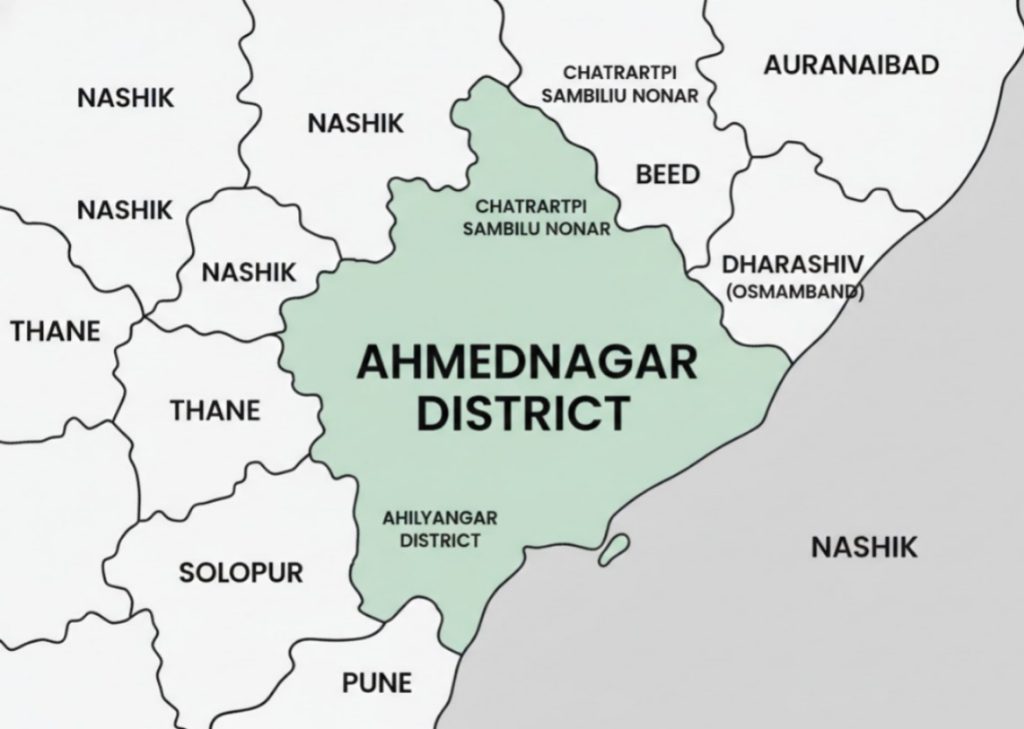
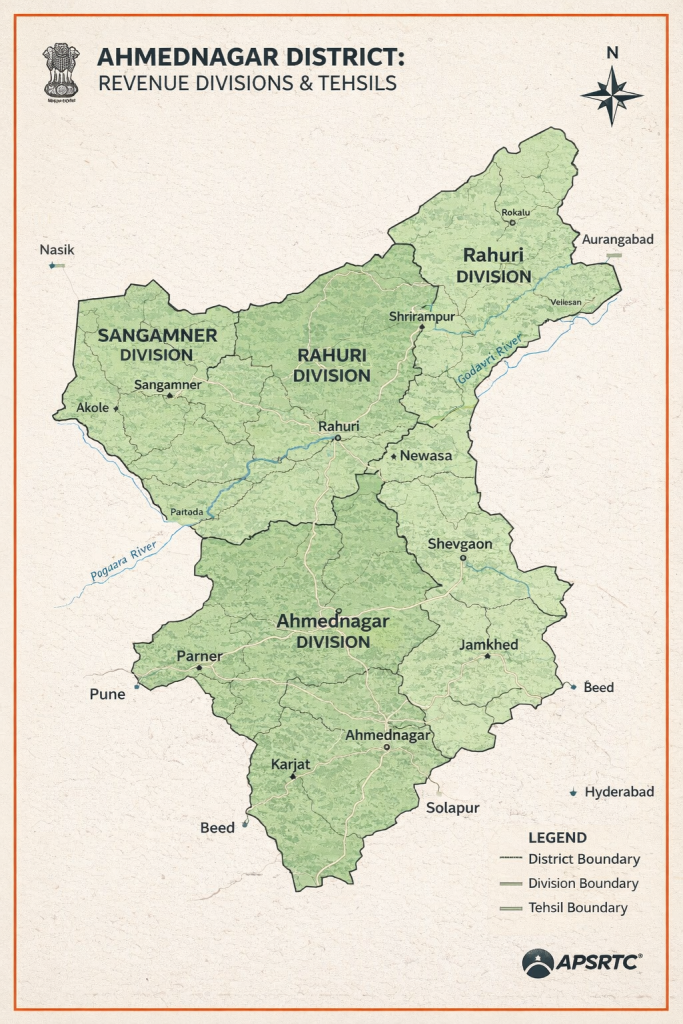
Ahmednagar District (recently renamed Ahilyanagar) is the largest district in Maharashtra by area. It is centrally located in the state and is bordered by:

-Nashik District to the northwest.

-Chatrapati Sambhajinagar (Aurangabad) and Beed Districts to the northeast and east.

-Dharashiv (Osmanabad) and Solapur Districts to the southeast.

-Pune and Thane Districts to the west.

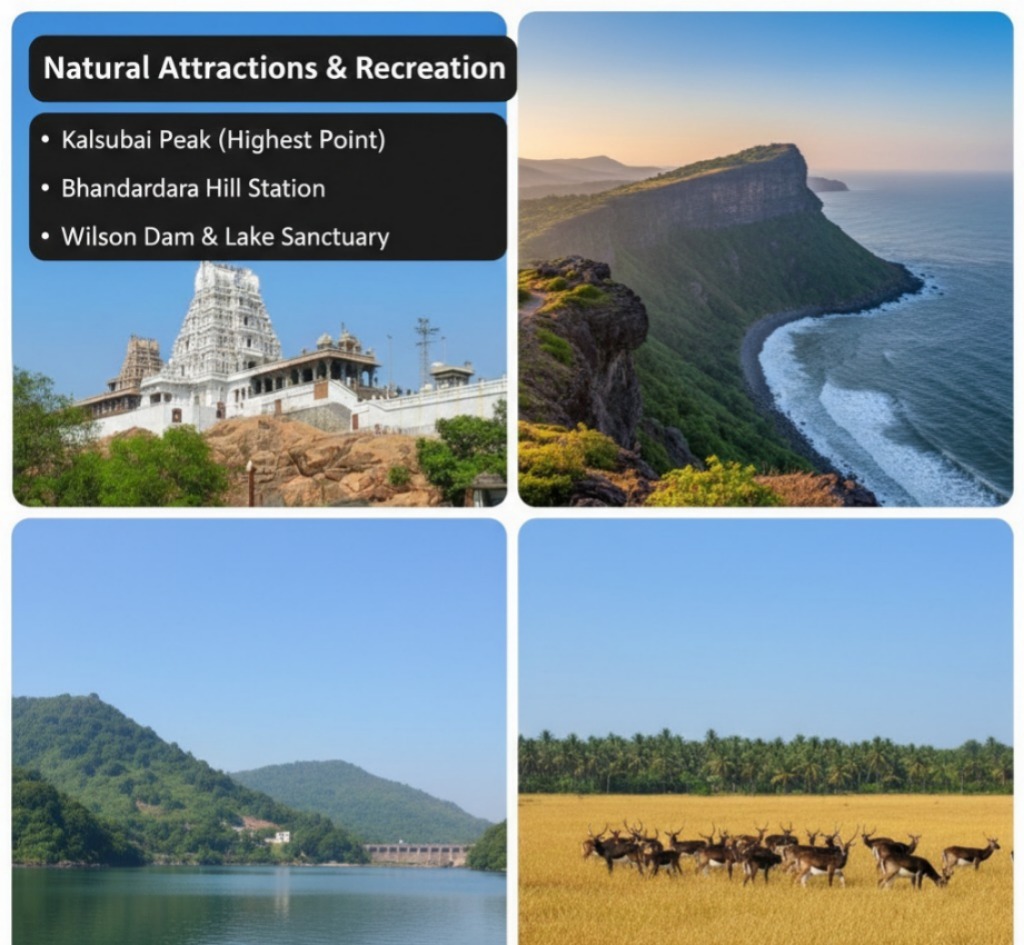
The district features a diverse landscape ranging from the rugged Sahyadri mountain ranges in the west, home to the highest peak in Maharashtra (Kalsubai), to the fertile Godavari and Bhima river basins in the plains.

whatsapp image 2026 01 28 at 8.19.19 am

History & Cultural Heritage

whatsapp image 2026 01 28 at 8.33.54 am

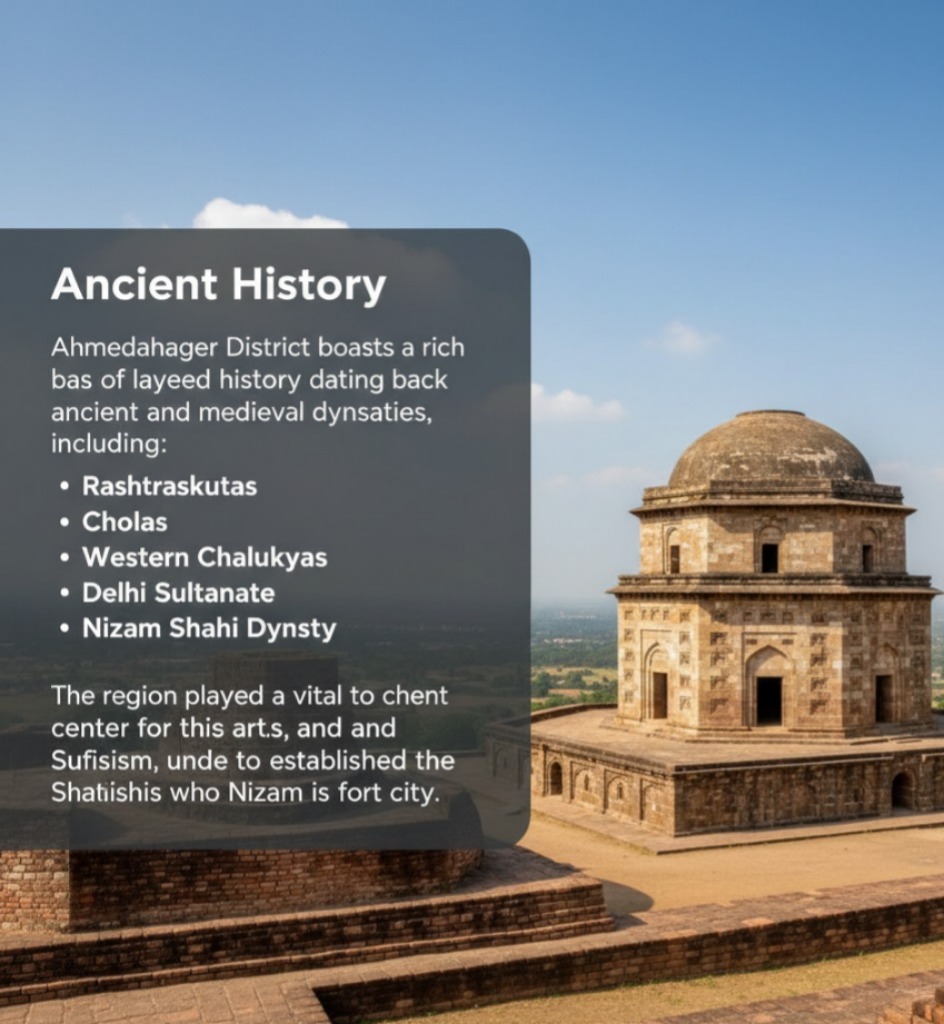
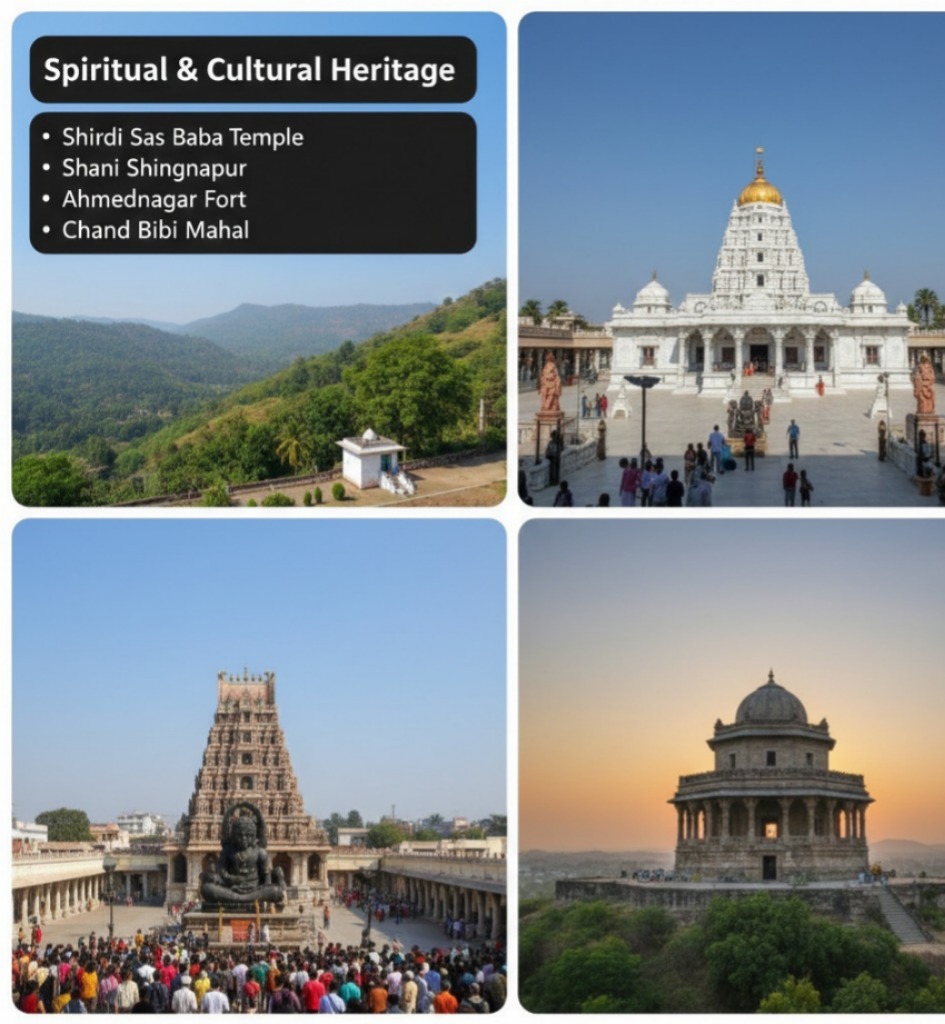
Ahmednagar holds a distinguished place in the history and cultural heritage of Maharashtra, reflecting centuries of political power, spiritual movements, and social transformation. Founded in 1494 AD by Ahmad Nizam Shah I, the city became the capital of the Nizam Shahi dynasty and emerged as a major center of administration, architecture, and learning during the medieval period.

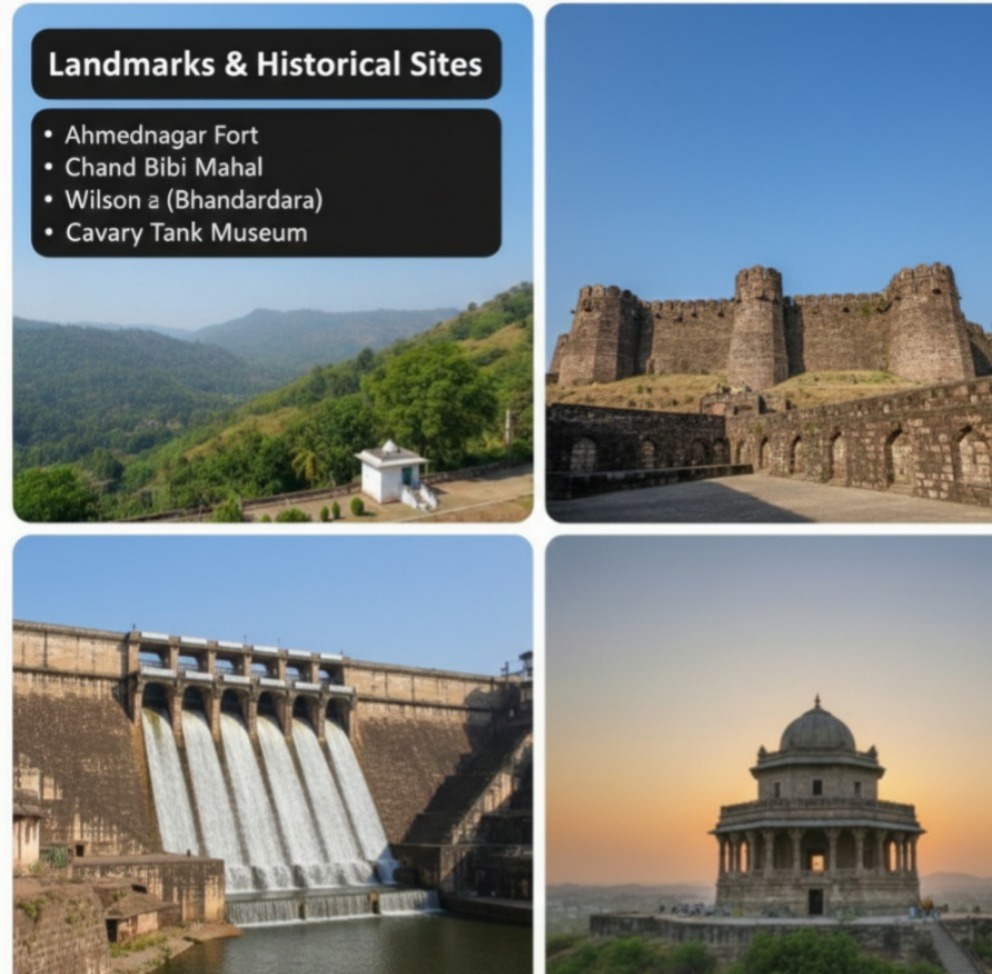
The district witnessed the rule of several dynasties, including the Nizam Shahis, Mughals, Marathas, and the British, each leaving a lasting imprint on its cultural and architectural landscape. The imposing Ahmednagar Fort, with its massive stone walls and bastions, stands as a symbol of this rich legacy and is closely associated with India’s freedom struggle, having housed prominent leaders during the British era.

Ahmednagar is deeply connected to the Bhakti movement and the lives of revered saints such as Sant Dnyaneshwar, Sant Eknath, and Sant Tukaram, whose teachings promoted devotion, equality, and social harmony. The district is also home to Shirdi, the sacred abode of Sai Baba, which attracts millions of devotees from across the world and represents unity of faith and spirituality.

🌾 Agriculture – The Backbone of Ahmednagar

chatgpt image jan 28, 2026, 09 02 35 am
chatgpt image jan 28, 2026, 09 02 39 am
chatgpt image jan 28, 2026, 09 02 41 am
chatgpt image jan 28, 2026, 09 12 37 am

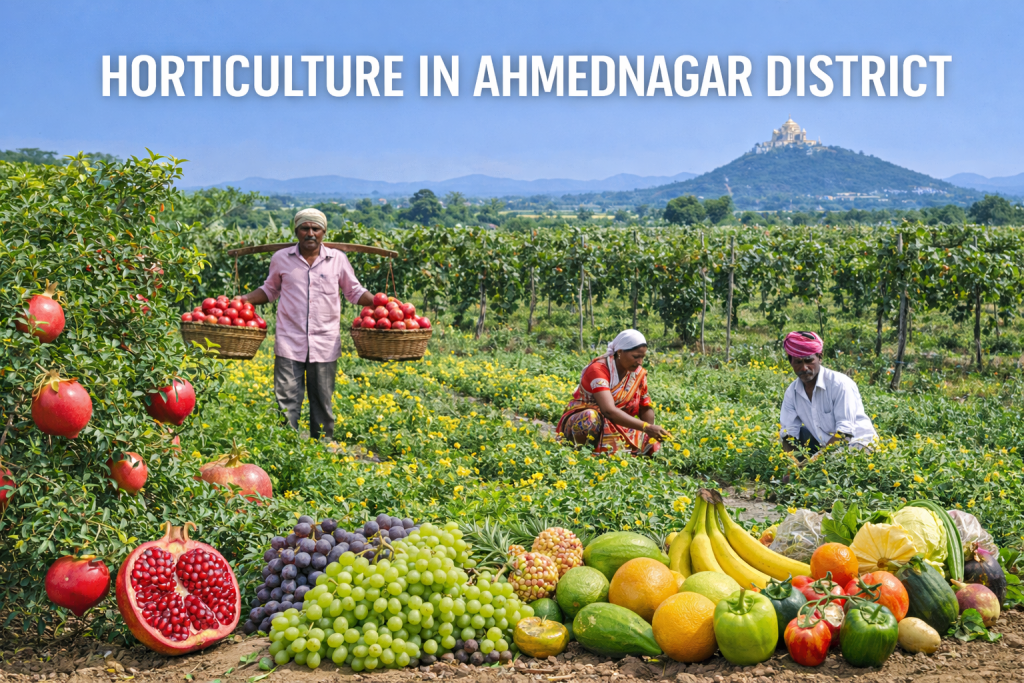
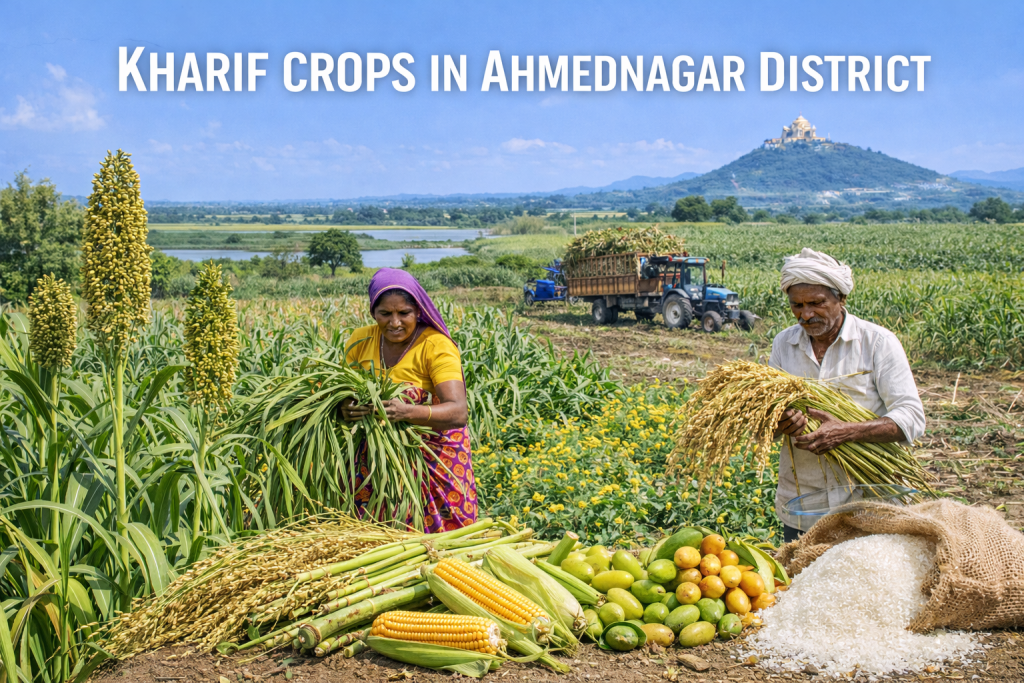
Ahmednagar District has a diverse and resilient economy, largely driven by agriculture, allied activities, and a strong cooperative sector. Located on the Deccan Plateau of Maharashtra, the district is known for its dryland farming, extensive irrigation projects, and one of the strongest sugar cooperative movements in India.

Major crops include:

  • Sugarcane (key commercial crop and base of the sugar industry)

  • Jowar and Bajra (staple food grains)

  • Wheat

  • Pulses such as tur, gram, and mung

  • Oilseeds including soybean and groundnut

  • Dairy farming, poultry, and agro-based industries further strengthen the district’s economy. With a strong cooperative framework, modern irrigation practices, Ahmednagar continues to balance traditional agriculture with economic growth.

Economic Strengths of Ahmednagar District

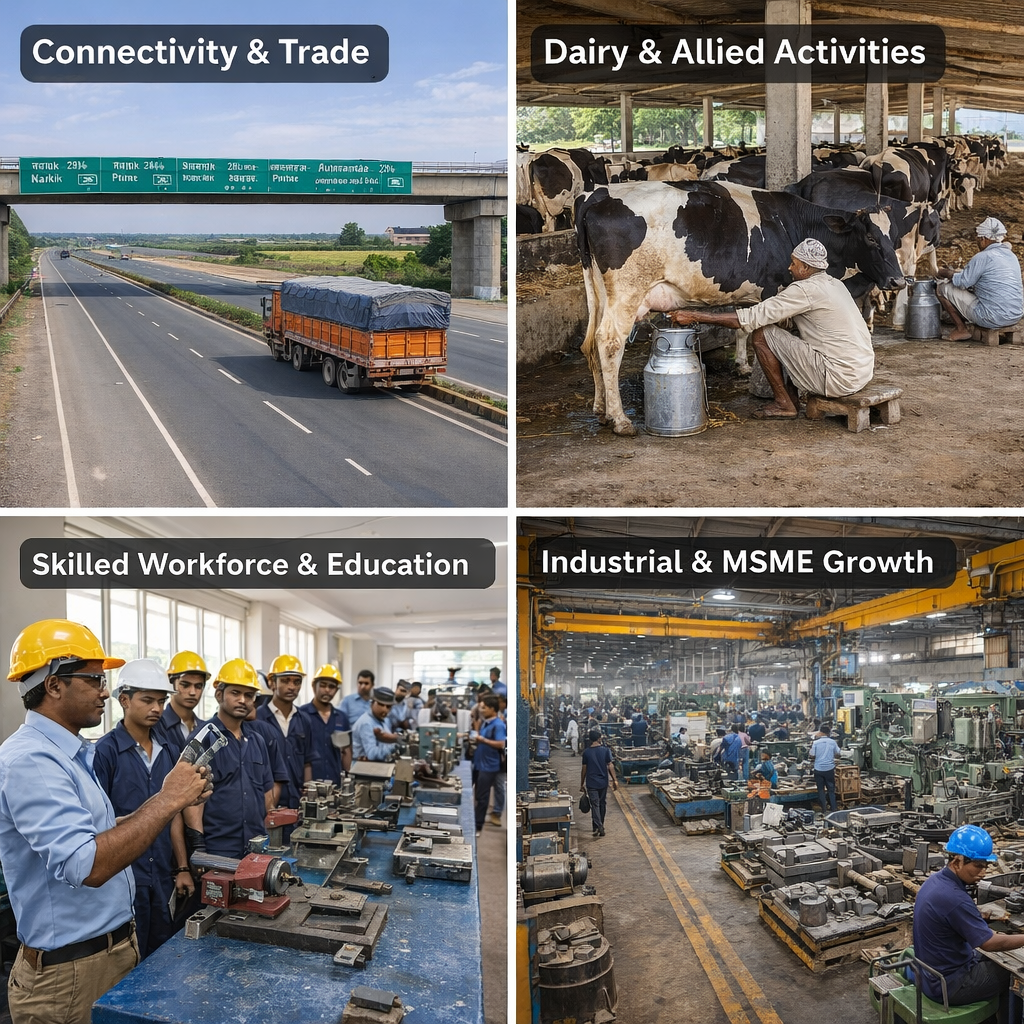
Ahmednagar District is one of Maharashtra’s economically significant regions, supported by a strong agricultural base, cooperative movement, and growing industrial activities.
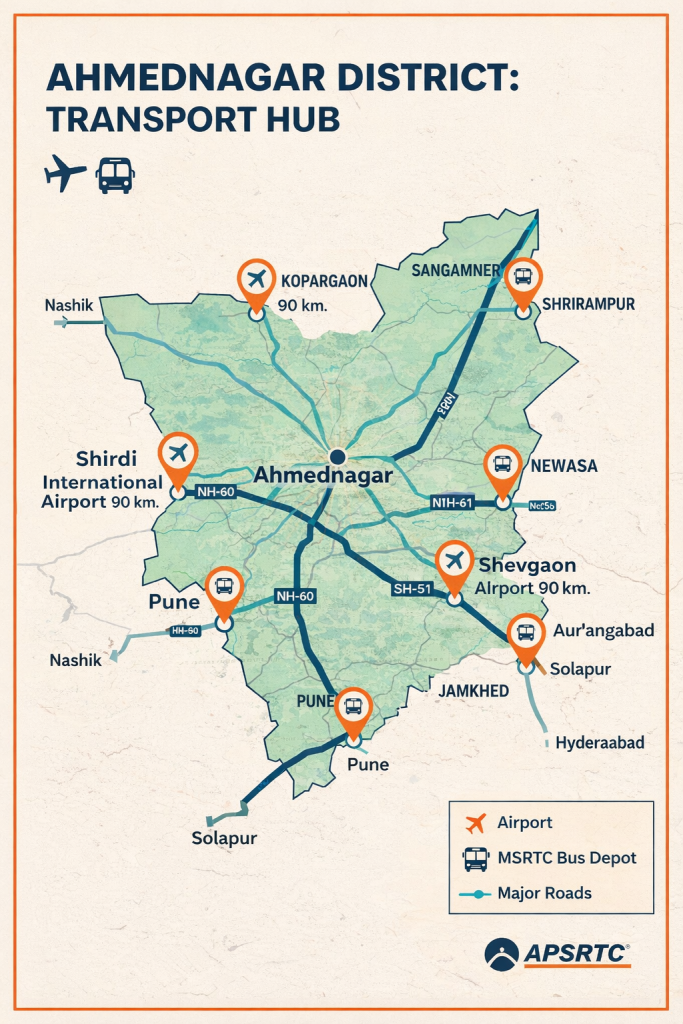
1.Connectivity & Trade
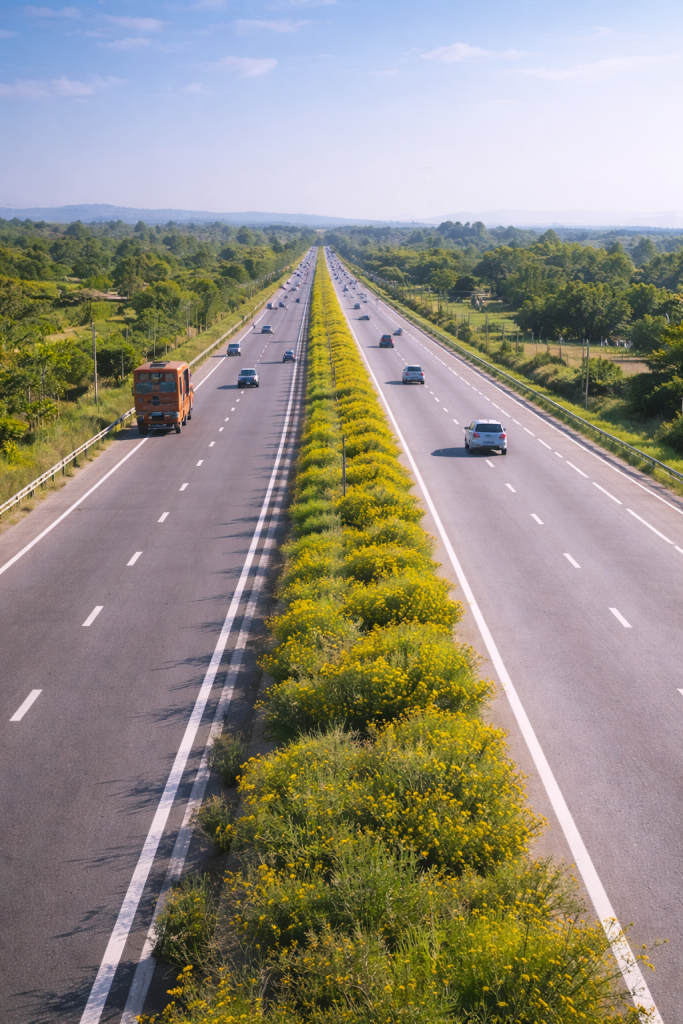
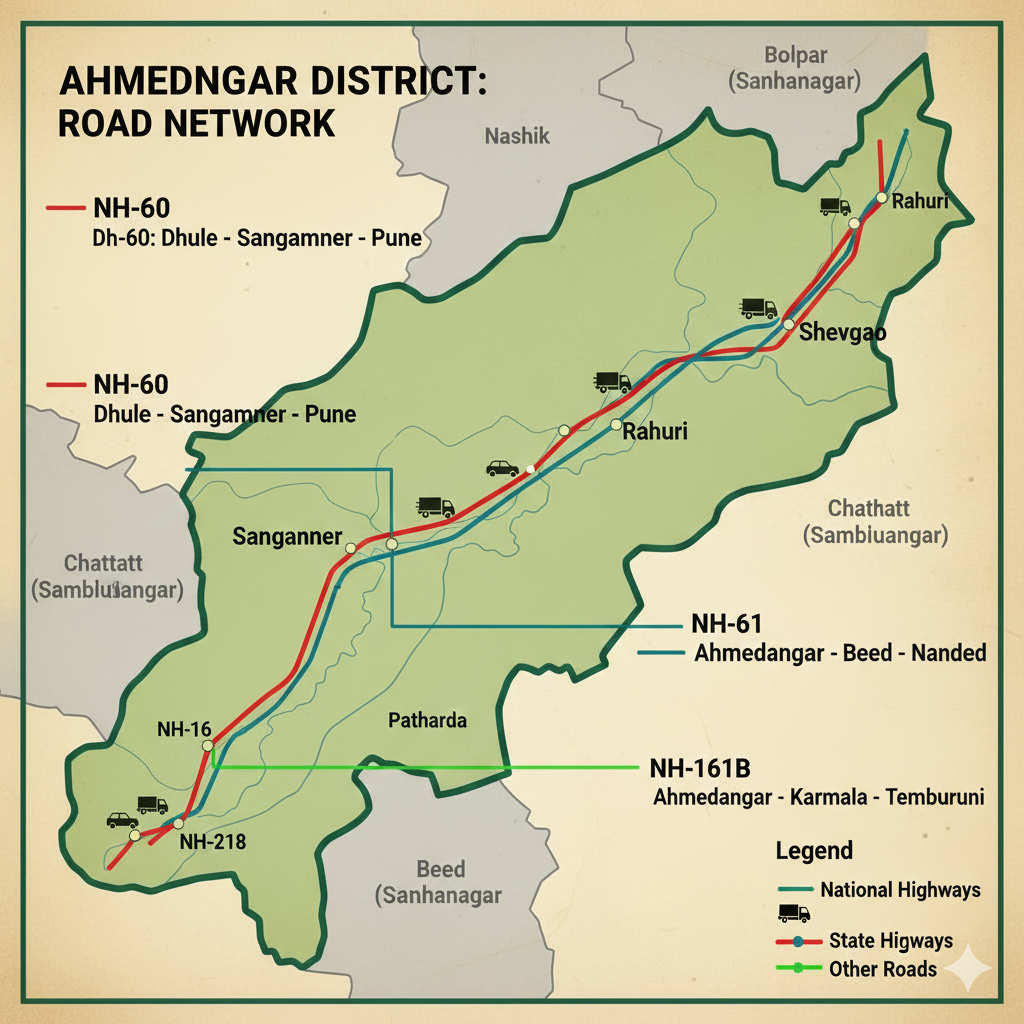
Good road connectivity and proximity to Pune, Nashik, and Aurangabad enhance trade, logistics, and market access.

2.Dairy & Allied Activities
Milk production, dairy cooperatives, poultry, and animal husbandry play a vital role in supporting rural livelihoods and supplementing farm income.

3.Skilled Workforce & Education
With reputed educational institutions and training centers, the district offers a skilled and semi-skilled workforce that supports industry and services.

4.Industrial & MSME Growth
Industrial areas around Ahmednagar city, Shrirampur, Sangamner, and Kopargaon host engineering units, agro-processing industries, and small-scale manufacturing enterprises.

chatgpt image jan 28, 2026, 09 42 18 am

šŸŽ­ Culture & People – Ahmednagar District

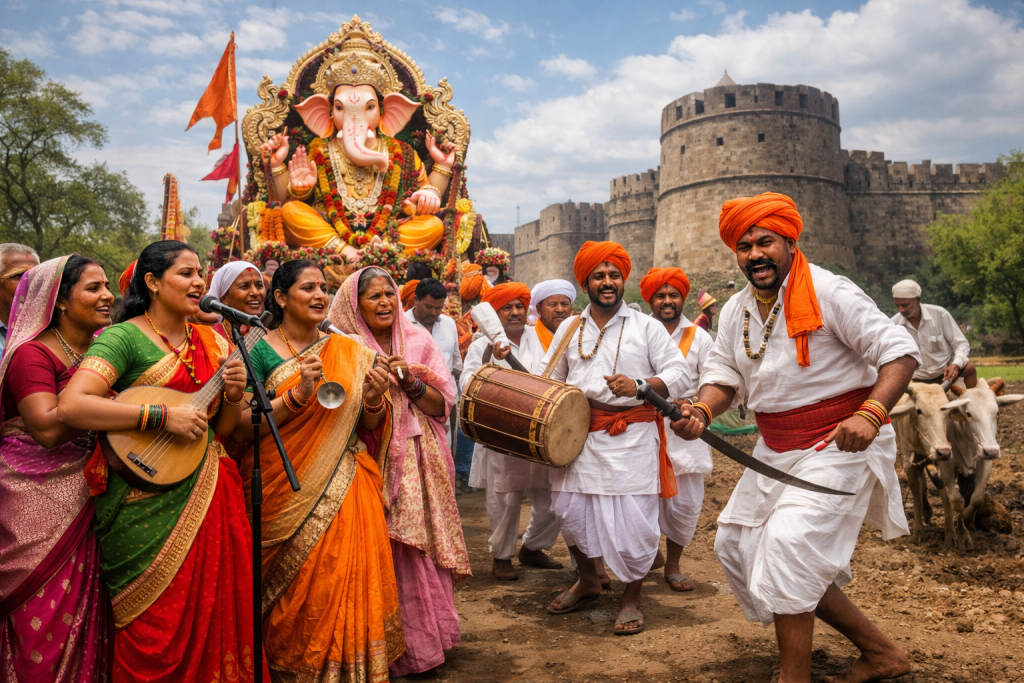
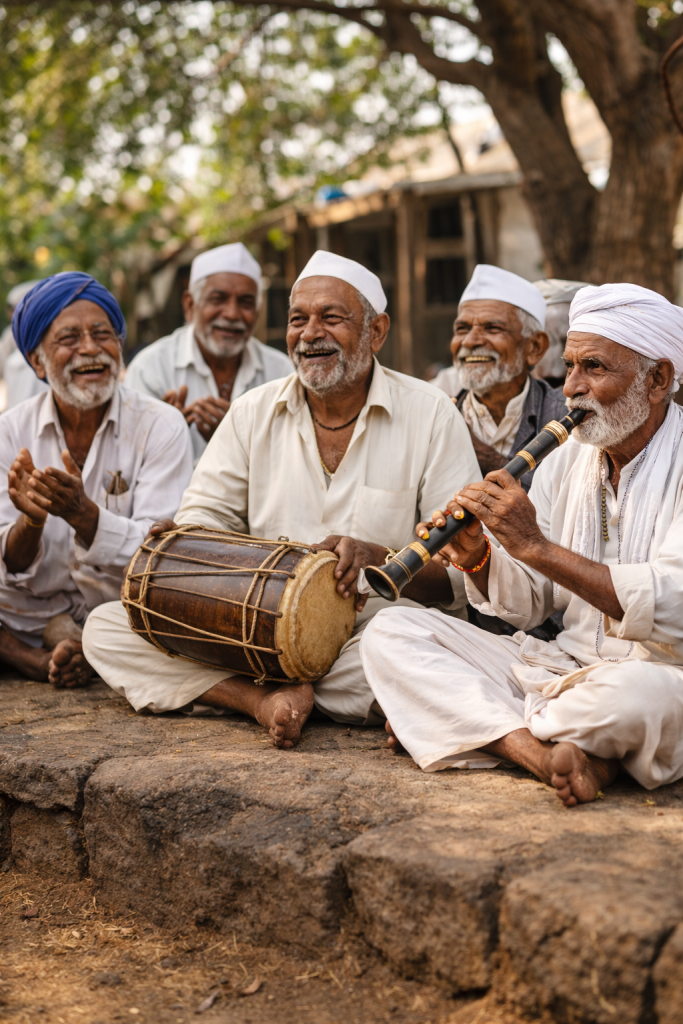
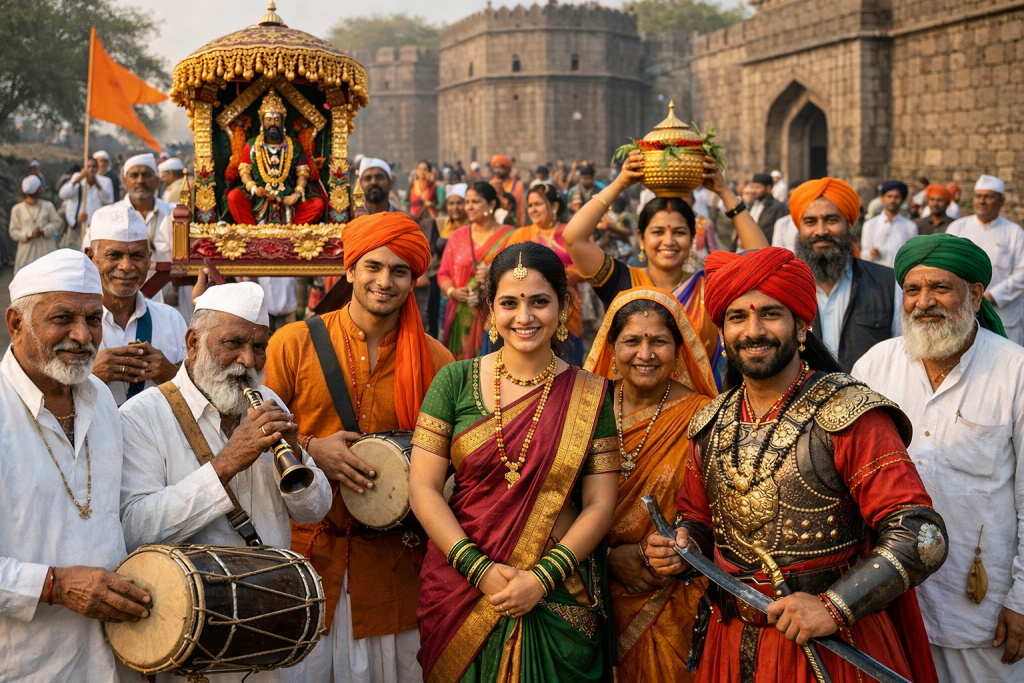
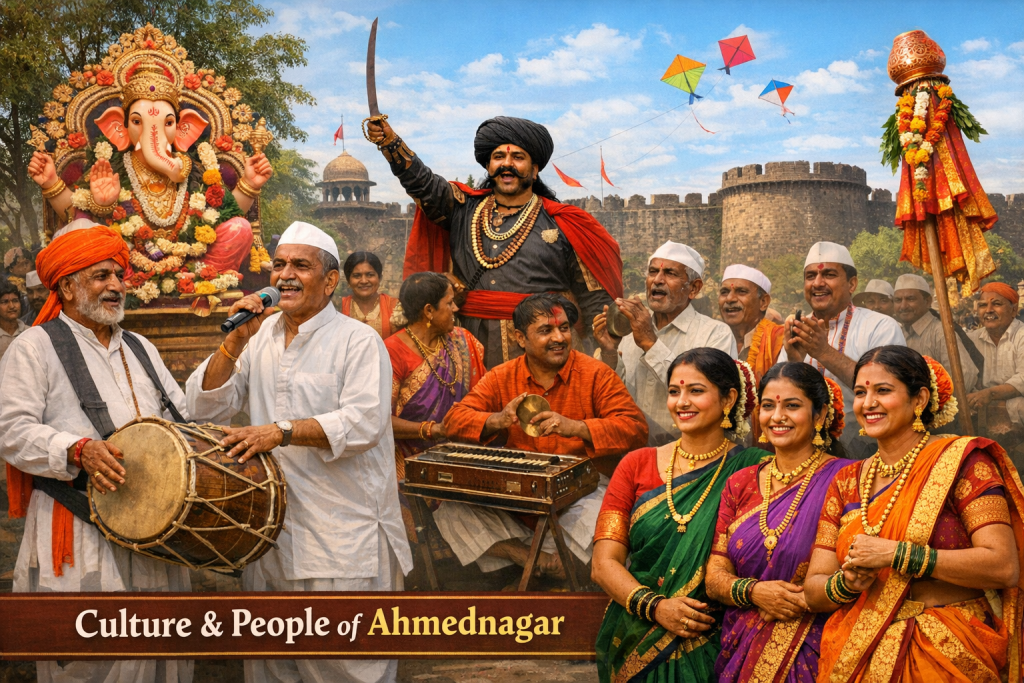
Ahmednagar District reflects the true spirit of Maharashtra through its rich cultural heritage, simple rural life, and strong community values. The people of the district are known for their resilience, hospitality, and deep connection to tradition, shaped by the region’s history, climate, and agrarian roots.

Marathi is the primary language, and local customs are closely tied to festivals, folk arts, and religious practices. Ganesh Chaturthi, Gudi Padwa, Diwali, Holi, and Dahi Handi are celebrated with great enthusiasm across towns and villages. Religious harmony is a defining feature, with temples, mosques, churches, and dargahs coexisting peacefully.

Ahmednagar has a proud legacy of saints, freedom fighters, and social reformers, including strong influences from Sant tradition and the freedom movement. Folk art forms such as Powada, Lavani, Tamasha, and Kirtan play an important role in cultural expression, often narrating tales of valor, devotion, and social values.

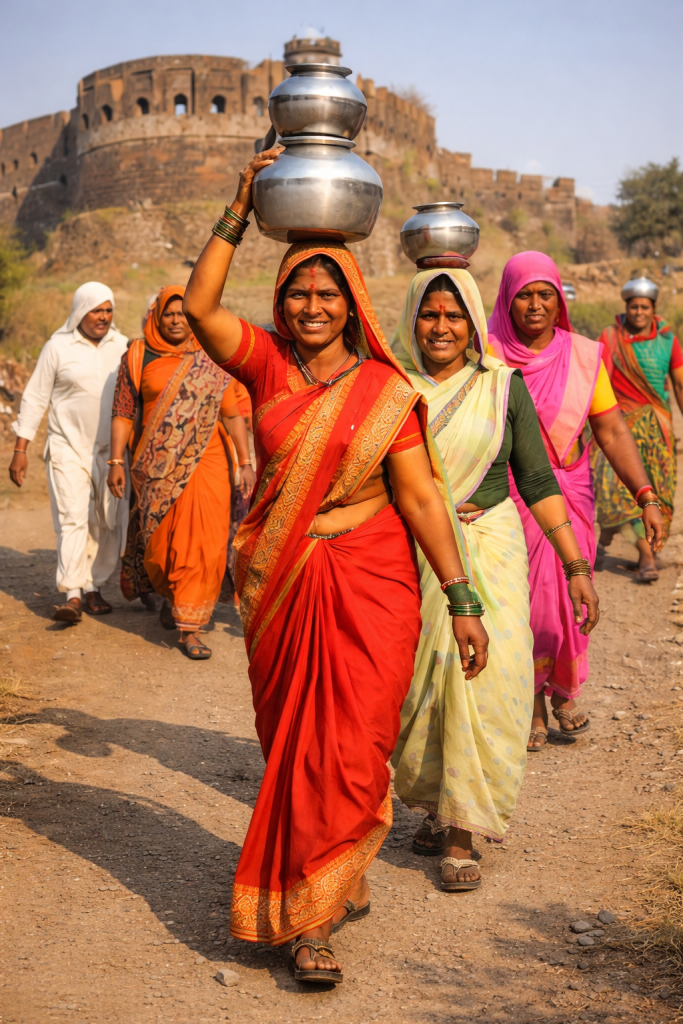
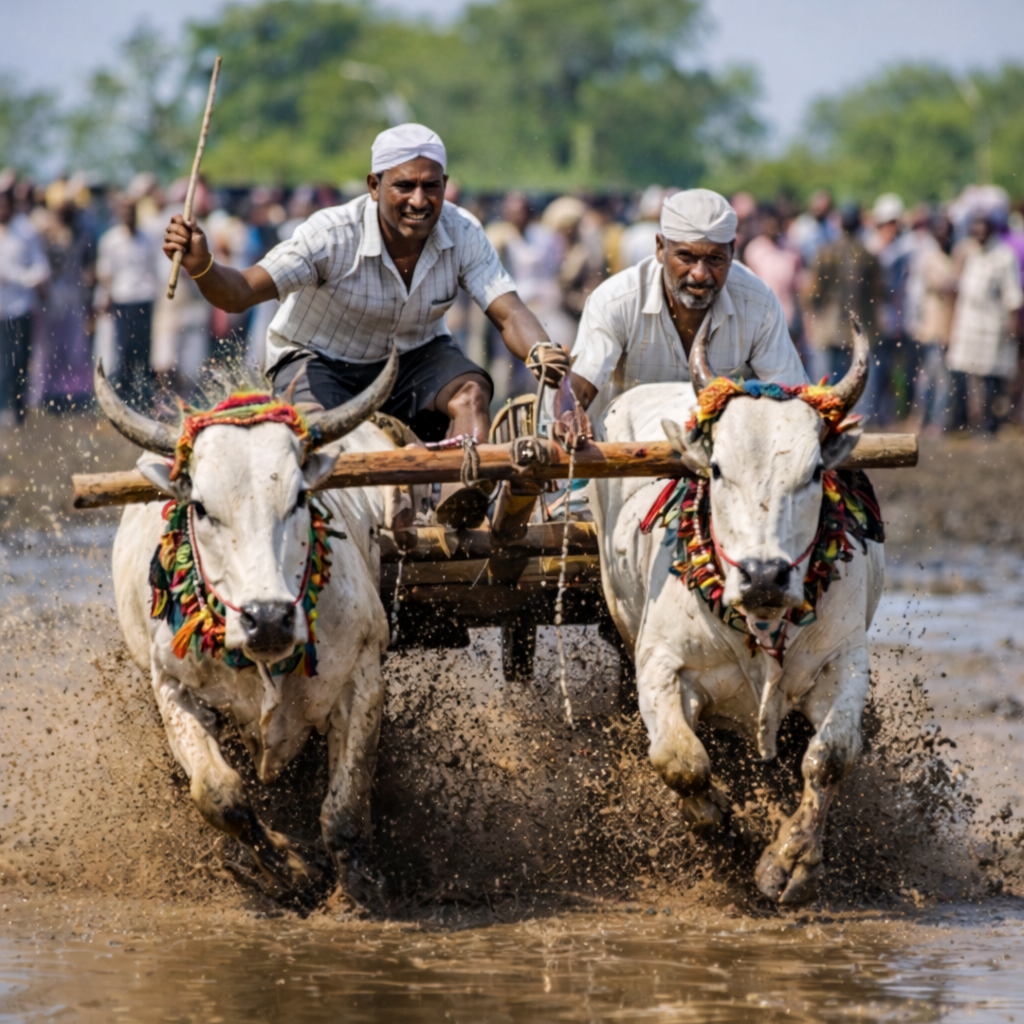
Rural life dominates the district, with agriculture and dairy farming shaping daily routines and social bonds. Traditional attire, local cuisine, weekly markets, and village fairs add to the cultural charm. At the same time, growing education and urbanization have brought a modern outlook, creating a unique blend of tradition and progress.

traditional celebration in rural maharashtra
chatgpt image jan 28, 2026, 11 54 59 am
traditional indian musicians in rural setting
farmers racing through a muddy track
cultural celebration at ahmednagar fort
cultural celebration in ahmednagar (1)

Tourism & Attractions

whatsapp image 2026 01 28 at 12.19.07 pm
whatsapp image 2026 01 28 at 12.22.53 pm
whatsapp image 2026 01 28 at 12.25.43 pm

🚌 Connectivity & Infrastructure

chatgpt image jan 27 2026 11 20 59 am 683x1024
gemini generated image mdgxl1mdgxl1mdgx

šŸš† Rail Connectivity

chatgpt image jan 28, 2026, 12 38 30 pm
whatsapp image 2026 01 28 at 12.38.06 pm

āœˆļø Air Connectivity – Ahmednagar

ahmednagar air travel connections explained

Key Features of Air Connectivity

Regional Access via Nearby Airports:
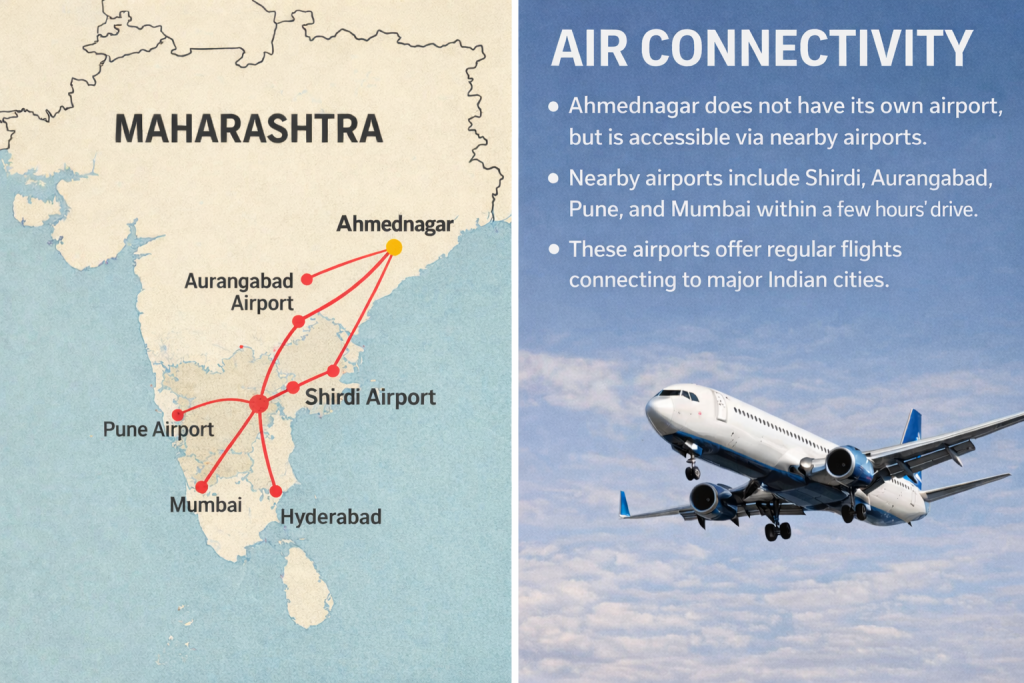
Ahmednagar District is well served by nearby airports, primarily Shirdi International Airport and Pune International Airport, providing convenient air access for residents, tourists, and businesses.

Domestic Network:
Shirdi Airport offers regular domestic flights connecting major cities such as Mumbai, Delhi, Hyderabad, Chennai, Bengaluru, and Ahmedabad, enabling smooth inter-state travel. Pune Airport further strengthens connectivity with frequent flights across India.

International Reach:
International connectivity is available through Pune International Airport, which offers direct and connecting flights to global destinations including Dubai, Singapore, Bangkok, and Europe via transit hubs, supporting overseas travel and trade.

Ā 

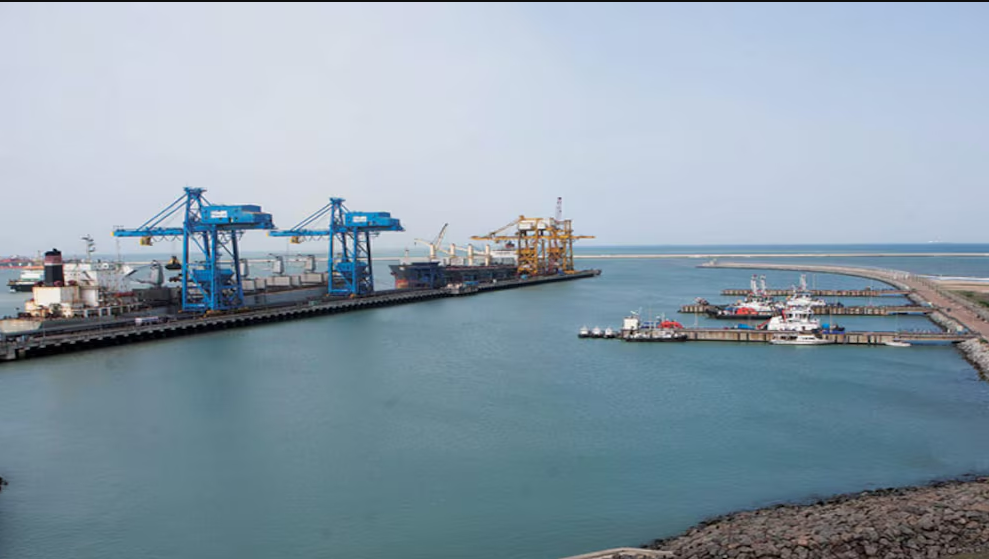
āš“ Ahmednagar Port

Ahmednagar District, though landlocked, holds a strategically important position as a major inland trade, transport, and logistics hub in Maharashtra. the district has historically served as a key link between western coastal regions and the interior of the state, facilitating the movement of agricultural, industrial, and commercial goods for centuries.

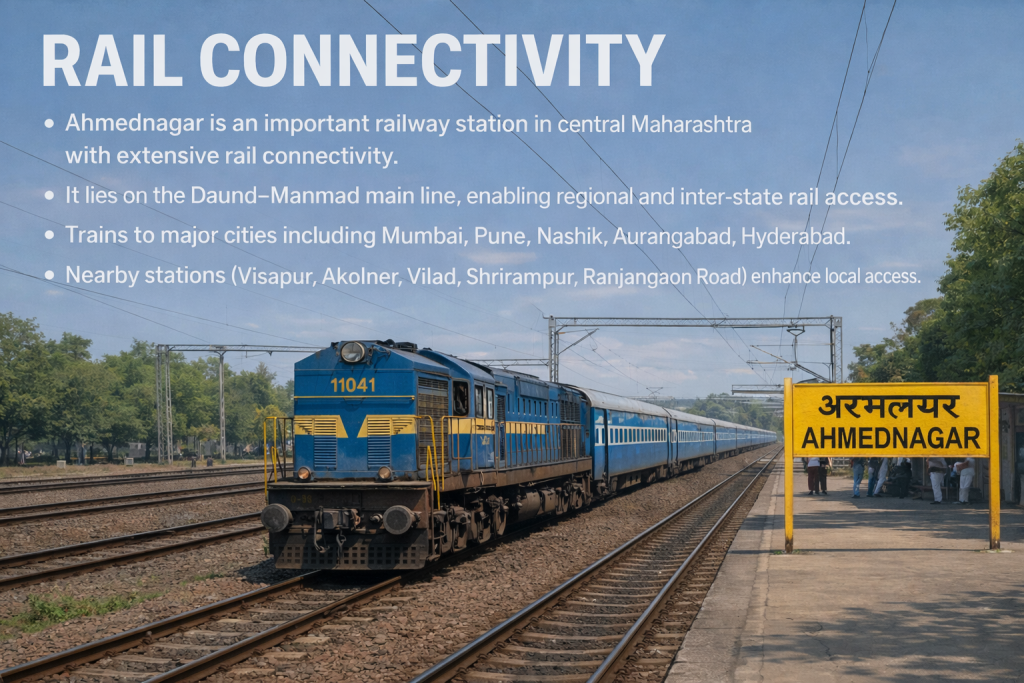
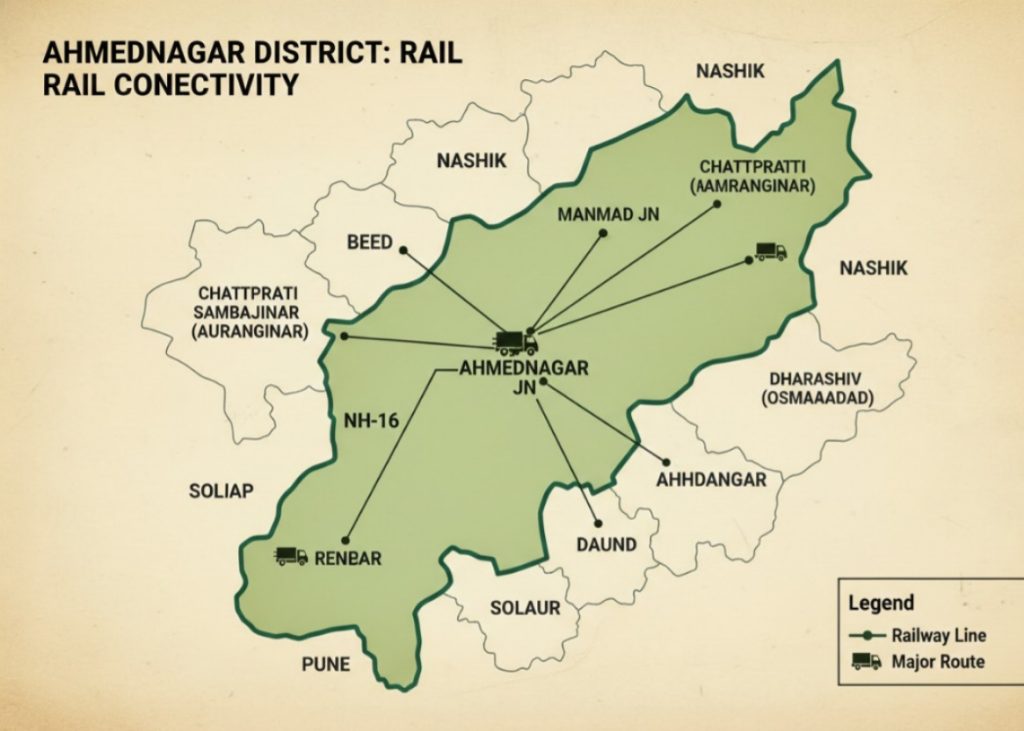
Today, Ahmednagar supports regional trade through its strong road and rail network, connecting it to major economic centers such as Pune, Nashik, Aurangabad, Mumbai, Solapur, and Hyderabad. The district plays a crucial role in the transport of sugar, agricultural produce, dairy products, horticulture crops, and industrial goods.Modern infrastructure development—including highway expansion, logistics parks, warehousing facilities, and improved rail freight services—has strengthened Ahmednagar’s role as an inland distribution center. Proximity to Pune International Airport and Shirdi International Airport.

screenshot 2025 03 26 132605
chatgpt image jan 28, 2026, 01 34 39 pm
chatgpt image jan 28, 2026, 01 42 00 pm
chatgpt image jan 28, 2026, 01 45 44 pm
Listings
News
Home
Jobs
Contact